
Companion Planting for Natural Pest Control
Long before anyone sold a bottle of insecticide, gardeners noticed that some plants seemed to protect their neighbors. A row of marigolds along the tomatoes, a patch of dill near the cabbage, nasturtiums tumbling around the squash. Some of that folk wisdom has held up well under closer study, some of it has not, and a good deal falls somewhere in between. The trick is knowing which is which.
Companion planting for pest control is not magic, and it will not make your garden bug-free. What it can do is tilt the odds in your favor. By mixing the right plants, you can lure pests away from your crops, confuse insects that hunt by scent, and, most importantly, build a thriving population of predators and parasites that do the pest control for you. In my own Willamette Valley beds, shifting to a more diverse, flower-rich layout did more to cut aphid and cabbage worm problems than any spray I ever used.
In this guide I will explain the main strategies behind companion planting, give you specific pairings that are worth trying, flag the combinations to avoid, and walk you through planning a layout you can put in the ground this season.
How Companion Planting Controls Pests
Companion planting protects crops through a handful of distinct mechanisms. Understanding them helps you choose plants for a reason rather than out of habit.
Trap Cropping
A trap crop is a plant that a pest likes more than your main crop. You plant it nearby so the pest gathers on it, where you can remove the pests, or sacrifice the trap plants entirely. This is one of the best-supported companion strategies.
Repelling and Masking
Many insects find their host plants by smell. Strongly aromatic herbs such as basil, mint, rosemary, sage, and the onion family may mask the scent of nearby crops or make an area less attractive. The effect tends to be local and modest, so herbs work best when they are interplanted closely rather than confined to a border.
Attracting Beneficial Insects
This is the heavy lifter. Ladybugs, lacewings, hoverflies, parasitic wasps, ground beetles, and minute pirate bugs eat or parasitize enormous numbers of garden pests. Many of the adults need nectar and pollen to survive and reproduce. Flowers with small, open blooms feed them, keeping them in your garden where their larvae go to work on aphids, caterpillars, and thrips.
Physical Disruption and Diversity
Pests have an easier time in a large block of a single crop. Interplanting different species breaks up that target, making it harder for pests to find and move between host plants. Taller plants can also provide shade or shelter for more sensitive crops.
The Best Trap Crops
Trap crops work best when they are planted a little earlier than the main crop or are simply more appealing to the pest. Check them often. A trap crop left unattended can turn into a pest nursery.
- Nasturtiums draw aphids, especially black bean aphids, and are attractive to cabbage white butterflies. Plant them a few feet from your brassicas and beans.
- Blue Hubbard squash is a well-known trap for striped cucumber beetles and squash bugs. Plant a ring of it around a cucurbit patch or at the ends of rows.
- Mustard greens and Chinese cabbage can lure flea beetles and harlequin bugs away from broccoli, cabbage, and kale.
- Radishes attract flea beetles and can serve as a quick sacrificial crop around eggplant and brassicas.
- Sunflowers tend to draw stink bugs and leaffooted bugs away from tomatoes and peppers, and their flowers feed beneficials as well.
- Dill can pull tomato hornworms off tomato plants, and it is easier to spot the big green caterpillars on its feathery leaves.
Pro tip: When a trap crop is heavily infested, act. Pull the plants into a sealed bag, knock pests into a bucket of soapy water, or treat just the trap plants. The goal is to concentrate pests where they are easy to deal with.
Repellent Herbs and Flowers
These plants are pleasant to grow anyway, so tucking them among your vegetables costs you very little. Just keep expectations realistic: they reduce pressure rather than eliminate it.
Aromatic Herbs
- Basil is a classic tomato partner, often credited with discouraging thrips and whiteflies. It also makes a fine harvest right next to the tomatoes you will pair it with in the kitchen.
- Onions, garlic, chives, and leeks are traditionally planted near carrots to confuse carrot rust flies, and around roses and brassicas to deter aphids.
- Rosemary and sage may help mask brassicas from cabbage moths and carrots from carrot flies.
- Mint can deter flea beetles and ants, but it spreads aggressively. Grow it in a sunken pot.
- Catnip may deter flea beetles and some aphids. Like mint, it spreads, and the neighborhood cats will find it.
Marigolds
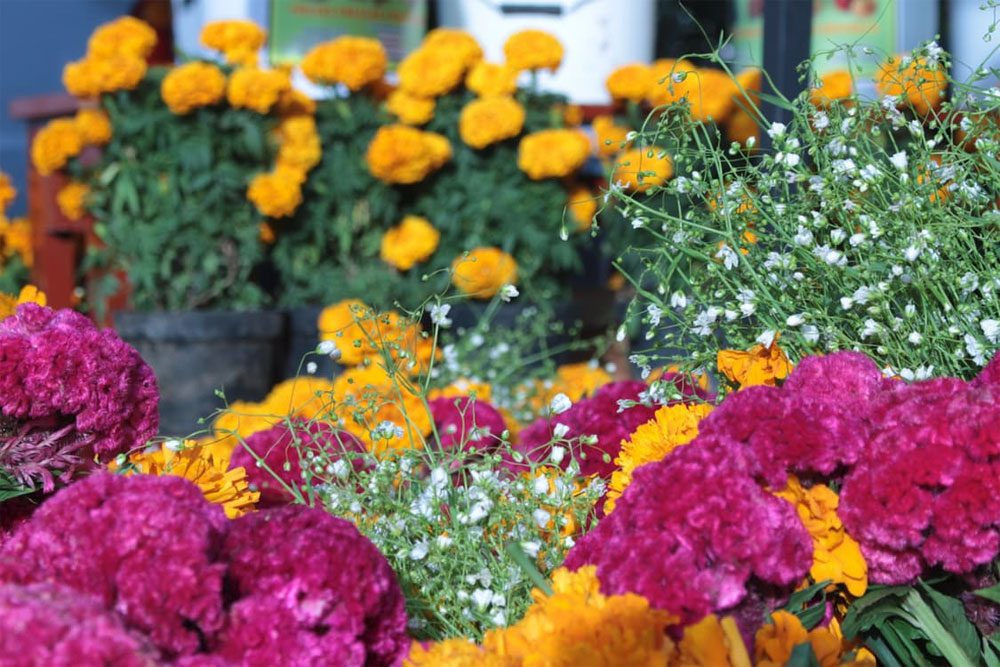
French marigolds are the most famous companion plant, and there is real substance behind them. Certain marigold roots release compounds that suppress root-knot nematodes, but that benefit comes mainly when marigolds are grown densely as a cover crop for a full season and then turned under, not from a few plants scattered as a border. Above ground, marigolds do attract hoverflies and other beneficials, which is reason enough to grow them.
Alliums Around Roses and Fruit
Chives and garlic planted at the base of roses and fruit trees are an old tradition. They are compact, attractive, and edible, and may help deter aphids. Just keep them away from beans and peas, as I will explain below.
Plants That Attract Beneficial Insects
If you only take one idea from this article, make it this: plant flowers for the predators. Most beneficial insects are tiny, so they favor flowers with small, shallow blooms where nectar is easy to reach.
The Umbel Family
Dill, fennel, cilantro, parsley, and carrots allowed to flower all produce umbrella-shaped clusters of tiny flowers. These are magnets for parasitic wasps, hoverflies, and lacewings. Let a few cilantro and parsley plants bolt instead of pulling them. That bolting is a feature, not a failure.
Daisy Family Flowers
Yarrow, cosmos, coreopsis, calendula, sunflowers, and asters provide landing platforms and pollen for ladybugs, minute pirate bugs, and predatory wasps. Yarrow in particular is a tough perennial that thrives across most USDA zones and flowers for months.
Sweet Alyssum and Buckwheat
Sweet alyssum is a low, honey-scented annual that hoverflies adore, and hoverfly larvae are voracious aphid eaters. It makes a perfect edging for lettuce and brassica beds. Buckwheat is a fast-growing summer cover crop that flowers within about four to six weeks of sowing, providing a quick nectar source for a wide range of beneficials.
Provide Continuous Bloom
Beneficials need food from early spring to fall. Choose a mix so something is always flowering: alyssum and calendula early, dill and cilantro in late spring, cosmos, zinnias, and sunflowers through summer, and asters and goldenrod into fall.
Henry's note: The year I started letting a strip of cilantro and dill flower along my brassica bed, I watched hoverflies working the blooms every morning. By midsummer, the aphid colonies on my kale were riddled with parasitized mummies. I did not spray once that season.
Specific Companion Pairings
Here are pairings that I have found reliable, or that are widely recommended for good reasons. Treat them as a starting point and observe how they behave in your own garden.
| Main Crop | Good Companions | Pests Targeted | How It Helps |
|---|---|---|---|
| Tomatoes | Basil, marigold, borage, dill (at a distance) | Hornworms, whiteflies, thrips | Masking scent, beneficial attraction, trap for hornworms |
| Cabbage, broccoli, kale | Dill, sweet alyssum, thyme, nasturtium nearby | Aphids, cabbage worms, flea beetles | Beneficial attraction, trap cropping |
| Carrots | Onions, leeks, chives, rosemary | Carrot rust fly | Scent masking |
| Cucumbers, squash | Nasturtium, radish, Blue Hubbard squash, borage | Cucumber beetles, squash bugs, aphids | Trap cropping, beneficial attraction |
| Beans | Summer savory, marigold, rosemary | Bean beetles, aphids | Scent masking, beneficial attraction |
| Lettuce | Sweet alyssum, chives, cilantro | Aphids | Hoverfly attraction |
| Potatoes | Bush beans, horseradish at bed corners, tansy (contained) | Colorado potato beetle | Diversity, traditional repellent |
| Eggplant | Radishes, bush beans, marigold | Flea beetles | Trap cropping, diversity |
| Roses | Garlic, chives, alyssum | Aphids | Scent masking, beneficial attraction |
Plants to Keep Apart
Some combinations work against you, either by competing for resources, sharing pests and diseases, or releasing compounds that stunt their neighbors.
- Beans and peas with onions and garlic: Alliums are widely reported to stunt legume growth. Keep them in separate beds.
- Tomatoes and potatoes: Both are nightshades that share early and late blight. Planting them together, or following one with the other, concentrates disease.
- Tomatoes and brassicas: Often listed as poor neighbors due to competition. At minimum, give them room.
- Anything with black walnut: Walnut roots release juglone, which is toxic to tomatoes, peppers, potatoes, and many other plants. Keep vegetable beds well outside the tree's root zone.
- Fennel with most vegetables: Fennel is allelopathic to many crops. Grow it in its own corner or container, where its flowers can still feed beneficials.
- Cucumbers and aromatic herbs like sage: Traditionally said to compete poorly together.
- Corn and tomatoes: The corn earworm and the tomato fruitworm are the same insect, so growing them close together gives it two feasts.
Safety: Some companion plants, including tansy, foxglove, and comfrey, are toxic if eaten. Label them clearly, keep them away from edible harvests, and site them where children and pets will not nibble on them.
Planning a Companion Planting Layout
A good layout combines your main crops, trap plants, herbs, and a steady supply of flowers in a way that is still easy to plant, weed, and harvest.
- List your main crops and note the major pests each one typically suffers from in your area.
- Group crops by family and needs. Keep brassicas together, cucurbits together, and nightshades together so you can rotate them as blocks next year.
- Assign a trap crop to each group with a known pest problem, and place it at the edges or a few feet upwind of the main crop.
- Interplant aromatic herbs within the beds, not just around the borders. Aim for herbs every few feet among susceptible crops.
- Add insectary strips. Dedicate the ends of beds, a border, or about 5 to 10 percent of your space to flowers that feed beneficial insects.
- Check for bad neighbors using the list above and move any conflicting plants apart.
- Plan for succession. Stagger sowings of alyssum, cilantro, dill, and buckwheat so something is always blooming.
- Sketch the plan and keep it. Note what worked and where pests showed up so you can adjust next season.
A Sample 4x8 Bed
Here is a simple layout that has worked well for me. Put two tomato plants along the north end, with basil tucked between and at their feet. Down the middle, plant a row of bush beans. On the south end, plant lettuce edged with sweet alyssum. Set a few French marigolds at the corners, and let one or two cilantro plants bolt along the long edge. The layout is productive, easy to reach from both sides, and full of flowers for predators.
Keep Your Soil Healthy
Healthy plants resist pests better. Feeding your soil with finished compost builds the structure and microbial life that grow stronger crops. If you are just starting, our guide to composting for beginners covers everything you need. And for weeding between tightly interplanted crops, a narrow-bladed hoe is invaluable; see our rundown of garden hoes to choose one that fits.
Common Mistakes
- Expecting instant results. Beneficial populations take a season or two to build. Stick with it.
- Relying on borders alone. A ring of marigolds around a bed does little. Interplanting is more effective.
- Neglecting trap crops. If you never remove the pests that gather on your trap plants, you are just raising more of them.
- Spraying broad-spectrum insecticides. These kill the beneficials you are trying to attract. If you must treat, spot-treat with targeted options. If you use a sprayer, keep one dedicated to gentle products; our guide to the garden sprayer explains how.
- Removing every bolted herb. Flowering cilantro, dill, and parsley are prime food for predators.
- Overcrowding. Packing plants too tightly reduces airflow and invites fungal disease, trading one problem for another.
- Letting mint and other spreaders loose. They will take over. Contain them.
Pro tip: Before reaching for any control, look closely at a pest colony with a hand lens. If you see ladybug larvae, lacewing larvae, or bloated, tan aphid mummies, the predators are already on the job. Give them a week.
Conclusion
Companion planting works best when you think of your garden as a community rather than a set of rows. Trap crops pull pests to where you can handle them, aromatic herbs muddy the scent trail, and a steady supply of small flowers keeps an army of predators on patrol. None of these techniques is a silver bullet by itself, but together they can reduce pest damage substantially and let you put away the sprayer for most of the season.
Start small. Pick one problem crop, add a trap plant and a couple of flowering companions, and watch what happens. Take notes, adjust, and expand next year. Over a few seasons you will build a garden that is not only more productive, but also more alive, buzzing with the insects that keep it in balance.
Frequently Asked Questions
It works best as part of a broader strategy rather than a cure-all. Trap cropping and planting flowers that support beneficial insects have the most consistent benefits, while repellent herbs tend to offer modest, localized help.
French marigolds attract hoverflies and other beneficials, and their roots can suppress root-knot nematodes when grown densely for a full season. A few plants scattered along a border will not repel most insects on their own.
Blue Hubbard squash is one of the most widely used trap crops for striped cucumber beetles and squash bugs. Plant it around the edges of your cucurbit patch a little earlier than your main crop and deal with the beetles that gather on it.
Keep beans and peas away from onions and garlic, separate tomatoes from potatoes because they share blight, and keep most vegetables away from fennel and black walnut trees. Corn and tomatoes also share the same fruitworm pest.
Devoting roughly 5 to 10 percent of your garden space to insect-friendly flowers is a practical target. Choose a mix with small, open blooms such as sweet alyssum, dill, yarrow, and cosmos so something flowers from spring through fall.
You Might Also Like

How to Keep Deer and Rabbits Out of Your Garden
Deer and rabbits can wipe out a garden overnight. Learn how to tell their damage apart, build fences that work, use repellents effectively, choose resistant plants, and adapt your defenses by season.
Keep Reading
Types of Crickets
Are you interested in learning more about crickets? Crickets are fascinating insects that have been part of our lives, and while some run at the sight of one, others find them quite fascinating—the reason why…
Keep Reading
How to Keep Ants Out of Hummingbird Feeder
Have you had enough with ants all over your hummingbird feeder? Ants are fascinating insects that have been part of our lives since, well, quite frankly, forever. Though most of the time they go unnoticed,…
Keep Reading