
Types of Pruning Shears and How to Use Them

If I could keep only one cutting tool in my garden, it would be a good pair of hand pruners. But anyone who has tried to take down an overgrown lilac or shape a boxwood hedge with a single pair of pruners knows the truth: no one tool handles every job. Pruning shears come in a whole family of shapes and sizes, and each one is built for a particular kind of cut.
Choosing the wrong tool is one of the most common reasons pruning goes badly. Stems get crushed, branches tear, wrists ache, and blades get sprung from being forced through wood that's too thick. Choose the right one, and pruning becomes quick, clean, and even a little satisfying.
In this guide I'll walk through the main types of pruning shears, from bypass and anvil pruners to loppers, hedge shears, pole pruners, and snips. I'll explain what each is best at, how to make a proper cut, when to prune, how to choose a pair that fits your hand, and how to keep them working for years.
Bypass Pruners
Bypass pruners are the workhorse of most gardens and the style I recommend to nearly every beginner. They work like scissors: a sharpened, curved cutting blade slides past a thicker, unsharpened hook, sometimes called the anvil jaw or counter blade.
What They're Best For
Because the blades pass each other rather than meeting head-on, bypass pruners make a clean, close cut without crushing the stem. That makes them the right choice for live, green wood: roses, shrubs, perennials, fruit trees, and vines. Most hand-held bypass pruners handle branches up to about 3/4 inch in diameter.
How to Use Them
Always position the pruner so the cutting blade is closest to the part of the plant that stays and the hook is on the side you're removing. This puts the cleanest part of the cut on the plant and leaves any slight bruising from the hook on the piece that goes to the compost pile.
Pro tip: Cut with the deepest part of the blade, near the pivot, not the tip. That's where you have the most leverage, and it puts far less strain on your hand and on the blade.
Anvil and Ratchet Pruners
Where bypass pruners favor precision, anvil and ratchet pruners favor power. They're the tools to reach for when the wood is dead, hard, or when your hands need a mechanical assist.
Anvil Pruners
Anvil pruners have a single sharp blade that closes down onto a flat surface, much like a knife on a cutting board. The anvil is usually made of softer metal or plastic so the blade doesn't dull as quickly when it strikes.
The anvil design delivers a lot of force, which makes it excellent for dead, dry, or hard wood. Because the blade pushes straight down, it tends to crush living tissue on both sides of the cut, so I don't use anvil pruners on healthy green stems. They shine for cleaning out dead canes, cutting up brush for the compost, and removing deadwood from shrubs.
Anvil pruners can't make a cut flush against a trunk or main stem, because the anvil gets in the way. They also lose their precision as the anvil wears, so check whether yours has a replaceable anvil insert.
Ratchet Pruners
Ratchet pruners are usually built on an anvil design but add a ratcheting mechanism that lets you cut in stages. You squeeze, release, and squeeze again, and each stroke drives the blade a little further through the branch.
These are a real gift for gardeners with arthritis, reduced grip strength, or small hands. They let you cut branches that would otherwise need loppers, with a fraction of the hand force. The tradeoff is speed: each cut takes several squeezes, so they're slower for high-volume pruning.
Henry's note: I keep a pair of ratchet pruners in my kit specifically for teaching workshops. Every season someone tells me they had given up on pruning their own roses because it hurt, and a ratchet pruner gets them back to it the same afternoon.
Loppers
Loppers are essentially pruners on long handles. The extra length, usually 15 to 36 inches, gives you leverage to cut branches roughly 1 to 2 inches thick and extends your reach into the middle of shrubs or up into small trees.
Bypass, Anvil, and Ratchet Loppers
Loppers come in the same three cutting styles as hand pruners, and the same rules apply: bypass for live wood, anvil for dead wood, ratchet or compound-action (geared) loppers when you need extra power with less effort.
Fixed vs. Telescoping Handles
Fixed handles are lighter and sturdier. Telescoping handles let you extend your reach when needed and shorten them for tight spaces, but they add weight and a joint that can loosen over time. For most home gardens, a fixed-handle bypass lopper around 24–30 inches long is the most versatile choice.
Pro tip: If you have to twist, rock, or wrench the loppers to get through a branch, stop. The branch is too big. Switch to a pruning saw rather than bending the blades out of alignment.

Hedge Shears, Pole Pruners, and Snips
Hedge Shears
Hedge shears have two long, straight blades and long handles, designed for shearing many small stems at once rather than making individual selective cuts. They're the tool for formal hedges, topiary, boxwood, and cutting back ornamental grasses and perennials in bulk. Wavy-edged blades help grip stems so they don't slide out toward the tips. Keep a steady, rhythmic motion and move the shears parallel to the surface you're shaping.
Pole Pruners
Pole pruners mount a bypass cutting head on a long pole, often 6 to 14 feet, operated by a rope and pulley. Many also include a pruning saw blade for thicker limbs. They let you cut high branches from the ground, which is far safer than working from a ladder. Make sure you're never standing directly beneath the branch you're cutting, and keep poles well clear of overhead power lines.
Snips and Floral Shears
Snips have short, narrow, pointed blades for precision work: deadheading, harvesting herbs and vegetables, trimming houseplants, thinning grape clusters, and cutting flowers. They're light, quick, and get into tight spaces where a full pruner can't reach. I carry a pair in my pocket nearly all summer. For fine grafting or taking cuttings, a sharp knife can be even better; see our guide to types of garden knives.
Safety: Never use a pole pruner, especially one with a metal or wet pole, anywhere near power lines. Keep at least 10 feet away from any overhead line, and call a professional arborist for branches near utilities.
Choosing the Right Tool for the Job
Here is the quick reference I give students. Match the tool to the branch size and the condition of the wood.
| Tool | Cutting Capacity | Best For | Avoid Using On |
|---|---|---|---|
| Bypass pruners | Up to about 3/4 inch | Live stems, roses, shrubs, fruit trees | Dead, very hard wood |
| Anvil pruners | Up to about 3/4–1 inch | Dead wood, dry canes, brush cleanup | Soft green stems, flush cuts |
| Ratchet pruners | Up to about 1 inch | Gardeners with limited grip strength | High-volume quick pruning |
| Loppers | About 1–2 inches | Thicker branches, reaching into shrubs | Branches over their rated size |
| Hedge shears | Small twigs and soft growth | Hedges, topiary, cutting back perennials | Selective cuts, thick branches |
| Pole pruners | About 1–1.5 inches (more with saw) | High branches from the ground | Anything near power lines |
| Snips | Soft stems up to about 1/4 inch | Deadheading, harvesting, houseplants | Woody branches |
Fit and Comfort
Hand pruners come in different sizes, and one that's too large will tire your hand quickly. When the handles are fully open, you should be able to grip them comfortably without stretching your fingers. Look for:
- Handle size that matches your hand; many brands offer small, medium, and large.
- Left-handed models if you're a lefty. The blade orientation matters for visibility and comfort.
- Rotating handles, which roll with your fingers and can reduce fatigue during long sessions.
- Replaceable parts, including blades, springs, and anvils. A pruner you can repair is a pruner you'll keep for decades.
- A secure, easy-to-operate lock that you can work with one hand.
Proper Cutting Technique
Good pruning is as much about where you cut as what you cut with. A well-placed cut heals quickly and directs new growth where you want it.
How to Make a Clean Cut
- Identify your target. Find a healthy outward-facing bud or a side branch you want to keep.
- Position the blade. Place the cut about 1/4 inch above the bud, with the cutting blade toward the plant.
- Angle the cut. Cut at roughly a 45-degree angle sloping away from the bud, so water runs off rather than pooling on the bud.
- Get deep in the jaws. Slide the branch as far into the blades as possible, close to the pivot.
- Squeeze smoothly. Close the handles in one firm, steady motion. Don't twist the tool.
- Check the result. The cut should be smooth, with no torn bark or crushed tissue.
Cutting Larger Branches
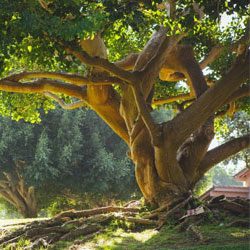
For limbs too big for loppers, use a pruning saw and the three-cut method: an undercut about a foot from the trunk, a top cut a little further out to drop the weight, then a final cut just outside the branch collar, the slightly swollen ring where the branch meets the trunk. Never cut flush with the trunk; the collar is what seals the wound.
Henry's note: Resist the urge to paint pruning wounds with sealant. Research from university extension programs has generally found that a clean cut outside the branch collar heals best when left alone to form its own callus.
When to Prune
Timing matters as much as technique. Pruning at the wrong time can mean losing a year of flowers or fruit.
- Late winter to early spring (dormant season): Best for most deciduous trees, fruit trees, and summer-flowering shrubs such as butterfly bush, panicle hydrangeas, and roses. Without leaves, you can see the structure clearly.
- Right after flowering: Spring-blooming shrubs like lilac, forsythia, and azalea set next year's buds on this year's growth. Prune them within a few weeks after the blooms fade.
- Summer: Light shaping, removing water sprouts and suckers, deadheading, and trimming hedges.
- Anytime: Remove dead, diseased, or damaged wood as soon as you see it.
- Avoid late summer and fall: Heavy pruning then can push tender new growth that won't harden off before frost, a real concern in colder USDA zones.
Pro tip: When cutting out diseased wood, wipe your blades with rubbing alcohol between cuts. It's quick, and it keeps you from spreading fire blight, canker, and other problems from plant to plant.
Caring for Your Pruning Shears
Pruners take a beating, but a few minutes of care keeps them cutting cleanly for years.
- Clean after every use. Wipe off sap and plant residue before it hardens. Rubbing alcohol dissolves most sap.
- Dry and oil. A drop of light oil on the pivot and a thin coat on the blades prevents rust.
- Sharpen regularly. Touch up bypass blades on the beveled side only. Our full guide on how to sharpen garden tools walks through it step by step.
- Check the pivot. Adjust the tension bolt so the blades close snugly without gaps or binding.
- Store them closed and dry. Use a holster or hang them in the shed. A tidy spot for every tool makes it easy; see how to organize a garden shed for ideas.
Common Mistakes to Avoid
- Cutting branches that are too thick. This springs the blades and leaves ragged cuts. Step up to loppers or a saw.
- Twisting the tool mid-cut. Twisting bends blades and loosens the pivot. Reposition and cut again instead.
- Using anvil pruners on green wood. The crushing action damages live tissue. Use bypass pruners for living stems.
- Leaving stubs. Stubs die back and invite decay. Cut just above a bud or just outside the branch collar.
- Cutting too close. Flush cuts remove the branch collar and slow healing.
- Pruning spring bloomers in winter. You'll cut off this year's flower buds.
- Using the blade tip for heavy cuts. Cut near the pivot for leverage and blade longevity.
Final Thoughts
You don't need every type of pruning shear to have a beautiful garden. For most home gardeners, a good pair of bypass pruners, a set of bypass loppers, and a pair of snips cover the vast majority of jobs. Add hedge shears if you have formal hedges, a pole pruner for trees, and an anvil or ratchet pruner if you deal with a lot of deadwood or need extra hand strength.
Whatever you choose, keep the blades sharp and clean, match the tool to the branch, and prune at the right time for each plant. Your shrubs and trees will reward you with healthier growth, better shape, and more flowers and fruit. Happy pruning.
Frequently Asked Questions
Bypass pruners work like scissors, with a sharp blade sliding past a hook, and make clean cuts on live green stems. Anvil pruners press a single blade down onto a flat surface, which gives more force but can crush living tissue. Use bypass for live wood and anvil for dead or dry wood.
Most hand pruners are designed for branches up to about 3/4 inch in diameter. Ratchet pruners can handle a little more with less effort. For branches from about 1 to 2 inches, switch to loppers, and use a pruning saw for anything larger.
Hold them so the sharp cutting blade faces the part of the plant that will remain, with the hook on the piece being removed. This leaves the cleanest side of the cut on the plant. Any minor bruising from the hook ends up on the discarded piece.
Summer-flowering shrubs are best pruned in late winter or early spring while dormant. Spring-flowering shrubs like lilac and forsythia should be pruned right after they finish blooming. Dead, damaged, or diseased wood can be removed at any time of year.
Generally, no. Extension research has found that clean cuts made just outside the branch collar heal best when left open to form their own callus. Sealants can trap moisture and may slow the natural healing process.
You Might Also Like

How to Sharpen and Maintain Garden Tools: The Complete Guide
A sharp tool does half the work for you. Learn how to clean, sharpen, and store pruners, shovels, hoes, and knives, plus the right angles and a simple seasonal maintenance schedule.
Keep Reading
Types of Trowels
Looking for Types of Trowels or types of garden trowels? In one of my earlier posts, I talked about an indispensable gardening tool known as pruning shears.
Keep Reading
Types of Shovels
A shovel is a popular hand tool that seems to be around since forever. It features a wide, broad blade that’s attached to a handle. It’s used to move things around like snow, rocks, soil,…
Keep Reading